

Key Highlights
- The Decibel Deficit: In engine rooms exceeding 110dB, reliance solely on audible sirens is a fatal error; light cuts through where sound cannot.
- PPE Paradox: Crew protecting their hearing with ear defenders inadvertently block out alarm tones, necessitating visual overrides.
- Cognitive Clarity: Strobe lights provide immediate, unambiguous confirmation of fire, reducing reaction time during the “fog of war.”
- Dead Zones: Steel bulkheads block sound waves, but strategic placement of beacons ensures alerts reach every corner of the vessel.
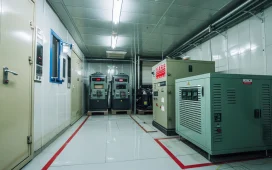
A ship’s engine room is not a library but a cacophony of pistons, turbines, and ventilation systems often running at deafening volumes. In this environment, a standard bell or electronic sounder is fighting a losing battle.
We often assume that a marine fire alarm system is effective simply because the panel shows a green light. But an alarm is only effective if it is perceived. If a fire breaks out near the main thrusters and the siren is drowned out by the machinery, the alarm technically works, yet the crew remains in mortal danger.
This is the “notification gap.” It is the difference between a system triggering and a crew reacting. Bridging this gap requires moving beyond acoustics. It requires the integration of visual alarms-high-intensity strobes and beacons that demand attention regardless of the auditory chaos. Here are four common challenges in maritime signalling and how visual technology resolves them.
1. The Ambient Noise Barrier
The primary adversary of any audible alarm is ambient noise. International maritime regulations mandate that alarm signals must be louder than the background noise by a specific margin (usually 10dB). On a quiet bridge, this is easy. In a machinery space running at 105dB, achieving 115dB throughout the entire compartment is technically difficult and physically painful.
You reach a point of diminishing returns where making the siren louder simply damages hearing without guaranteeing attention.
Visual alarms bypass this entirely. Light does not compete with sound frequencies. A high-intensity xenon strobe flashing at 1Hz cuts through the visual field instantly. Even if a crew member is standing next to a screaming generator, the sudden rhythmic flash on the bulkhead registers in their peripheral vision. It triggers a primal reaction. The brain ignores the constant noise but immediately flags the sudden change in light as an anomaly requiring attention.
2. The Hearing Protection Paradox
Safety protocols often conflict with one another. To protect crew members from long-term hearing loss, we mandate the use of heavy-duty ear defenders in engineering spaces. These defenders are designed specifically to block out high-frequency noise-the exact frequency range occupied by most electronic sounders.
This creates a dangerous scenario where a crew member might be working in a high-risk zone, oblivious to the fact that the general alarm has been sounding for two minutes. Visual alarms are the only reliable failsafe here. When you cannot trust the ears, you must target the eyes. A synchronised strobe light serves as a universal interrupt signal. It tells the crew member to remove their ear defence and check the status panel immediately.
3. Signal Differentiation and Panic
In an emergency, cognitive function drops. Panic sets in. A ship has dozens of alarms: general alarms, machinery faults, CO2 release warnings, and watertight door closures. To an untrained or panicked cadet, a ringing bell is just “noise.” Deciphering which alarm is sounding takes precious seconds-seconds that you do not have if a fuel line has ruptured.
Integrating visual alarms allows for immediate coding. While SOLAS (Safety of Life at Sea) provides strict guidelines, the distinct visual nature of a fire strobe differentiates it from a steady machinery fault light. The marine fire alarm system stops being a source of confusion and becomes a source of clear instruction. The flash means “Fire.” There is no need to pause and analyse the sound pattern. The visual cue bypasses the analytical brain and triggers the evacuation reflex.
4. Acoustic Shadows and Dead Zones
Ships are complex steel labyrinths. They are full of watertight doors, insulated bulkheads, and winding corridors. Sound behaves unpredictably in these spaces. It bounces, it gets absorbed, and it creates “acoustic shadows”-areas where the siren is muffled or inaudible due to physical obstruction.
Light travels differently. While it cannot go through walls, visual alarms can be strategically placed to bounce off reflective surfaces, filling a corridor with light even if the source is not directly in the line of sight. In a smoke-filled passageway, the scattering of light from a strobe can actually enhance visibility of the alarm condition, guiding the crew away from the danger zone. It ensures that there are no “dead zones” where a crew member could be trapped, unaware of the unfolding crisis.
The Redundancy Requirement
We must stop viewing visual signalling as an “optional extra.” In many jurisdictions and vessel classifications, it is no longer a choice; it is a statutory requirement for high-noise areas. But compliance aside, it is a moral imperative.
A marine fire alarm system that relies solely on sound is a system with a single point of failure. By layering visual indicators on top of audible ones, you create a safety net that accounts for the harsh reality of life at sea. You account for the noise, the ear defenders, and the panic.
Don’t Wait for the Siren to Fail
The safety of your vessel relies on the certainty that when the alarm triggers, the crew reacts. Do not let ambient noise or steel walls compromise your fire response. If you are ready to upgrade your vessel’s defences with compliant, high-visibility signalling solutions, you need a partner who understands the marine environment.
Let us ensure that when danger strikes, your crew sees it coming. Contact Atlas Technologies today.