

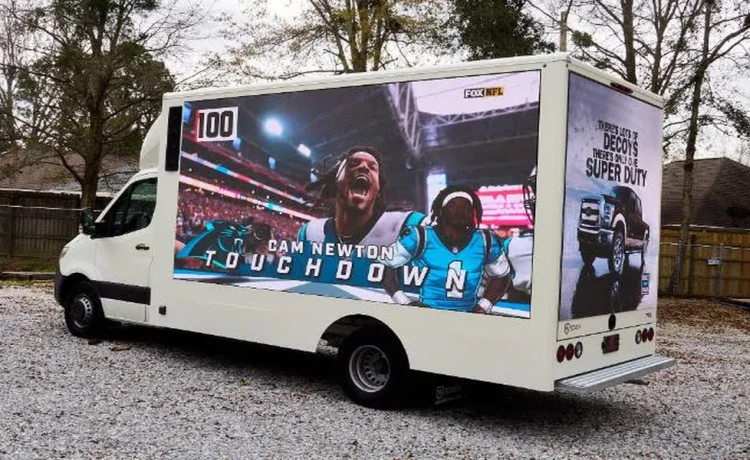
Advertising agencies managing outdoor campaign delivery for multiple clients need a format that gives direct control over placement, timing, and creative deployment. This is rather than working within fixed inventory constraints that standard advertising media buying imposes. A billboard truck service supports agency campaigns across nine specific areas. Each area addresses a distinct campaign management requirement that fixed outdoor formats cannot meet within standard inventory structures.
- Client route territory
A billboard truck service gives advertising agencies direct control over which districts and corridors the display unit covers for each client campaign, with territory decisions made based on where that client’s target audience is confirmed to be present during the activation window rather than which fixed board positions are available near the intended zone.
2. Route phase sequencing
The agency sequences route territories across morning, midday, and evening activation phases based on when each client’s target audience is present in each district at the highest concentration. This ensures the unit covers each zone during the period when impression opportunity for that specific client audience is highest across the activation day.
3. Real-time route adjustment
A billboard truck service allows advertising agencies to adjust the display route during the active campaign window when audience concentration shifts away from the originally planned corridor, keeping placement aligned with actual audience presence rather than locked to a pre-confirmed position that no longer delivers the intended client campaign coverage.
4. Zone-matched creative
A billboard truck service supports agency creative deployment by allowing agencies to assign different creative executions to different route segments, ensuring each client’s message directly matches the audience profile present in each zone the unit travels through rather than running one undifferentiated message across every corridor regardless of audience composition.
5. Remote creative updates
Creative files update remotely without physical intervention at the unit. This gives agencies real-time creative control across the full activation window without production delays or additional costs that mid-campaign campaign changes generate in printed outdoor formats where artwork must be reprinted before a new message reaches the display surface.
6. Multi-client scheduling
Single unit multi-client scheduling assigns different client campaign routes to different activation days within the same booking period, covering each client’s priority audience zones on the days when that client’s campaign requires display presence without requiring separate unit bookings for each individual client.
7. Activation period separation
Activation period separation assigns morning windows to one client’s audience zone and evening windows to a different client’s zone within the same campaign day. This maximises display utility across the full activation period without overlap between competing client placement requirements within the same booking window.
8. Delivery confirmation logging
Activation logs record which route segments the unit covered for each client, during which time windows, and for what duration at each location across the campaign day. This gives agencies verifiable placement delivery records rather than estimated impression figures attached to a fixed board position.
9. Client reporting data
Route coverage data confirms whether the unit reached the intended audience concentration zones during the planned time slots for each client. This gives agencies documented placement delivery confirmation that supports client reporting across the full campaign schedule without relying on projected audience estimates attached to fixed board positions.
A billboard truck service gives advertising agencies a controllable outdoor display format that operates according to client campaign objectives rather than available board positions. Route control, creative flexibility, multi-client scheduling, and verified delivery reporting combine into a campaign management structure that fixed outdoor inventory cannot replicate.