

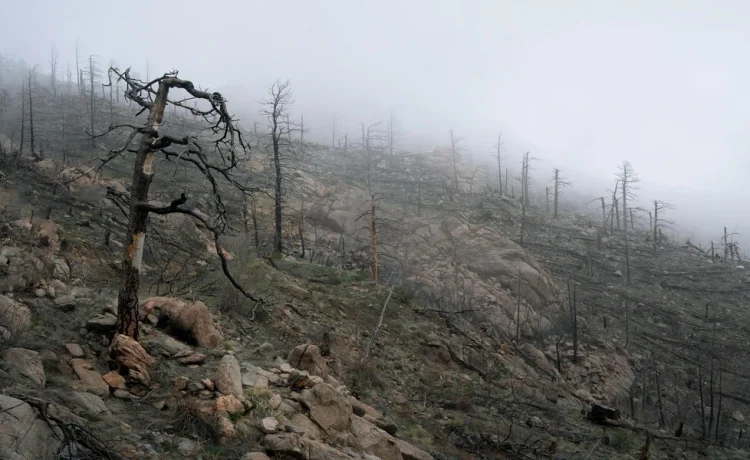
Jean-Pierre Conte writes about wildfire preparedness from a place with direct exposure to the risk. As a philanthropist based in Aspen, Colorado, Conte, founder and managing partner of his family office, Lupine Crest Capital, opens a recent Forbes Business Council column by pointing to a statistic specific to his home state: the twenty largest wildfires in Colorado’s recorded history have all occurred since 2001, according to the Colorado Division of Fire Prevention and Control.
That figure sets up an argument aimed at businesses operating in fire-prone regions generally, and it isn’t limited to Colorado. Conte writes that wildfire risk has shifted from an occasional emergency to a recurring feature of doing business in these areas, which changes what an adequate response looks like.
A Longer Time Horizon Than Most Giving
Much of Conte’s column pushes against the instinct to treat wildfire response as an event rather than a condition. He recommends that companies build ongoing relationships with local fire officials and community leaders, checking in regularly rather than reacting only after a fire has already caused damage.
He also references the 2025 Los Angeles wildfires, where property damage reached an estimated $53.8 billion according to the Los Angeles County Economic Development Corporation, as evidence that the financial stakes of inaction have grown substantially in recent years across fire-prone parts of the country beyond Colorado alone.
What Sustained Involvement Looks Like in Practice
Conte’s recommendation is specific: community leaders are consulted before resources are committed, relevant professional expertise is contributed alongside any funding, and the relationship is maintained across multiple years rather than a single gift being treated as sufficient. He frames this as the standard businesses in wildfire-exposed regions should hold themselves to, given how consistently the risk has recurred since the early 2000s.
Living Where the Risk Is Not Abstract
Writing as a resident of a mountain community rather than an outside observer, Conte frames wildfire risk as a fact of daily life rather than a distant policy question. That vantage point shapes his insistence on consultation as the first step, since a business leader without direct local exposure to the risk is less likely to know which specific vulnerabilities matter most in a given community, whether that involves evacuation routes, defensible space around structures, or emergency communication systems.
The complete column and additional commentary from Conte on community involvement are available through his Forbes Business Council profile and personal website, both linked below.