

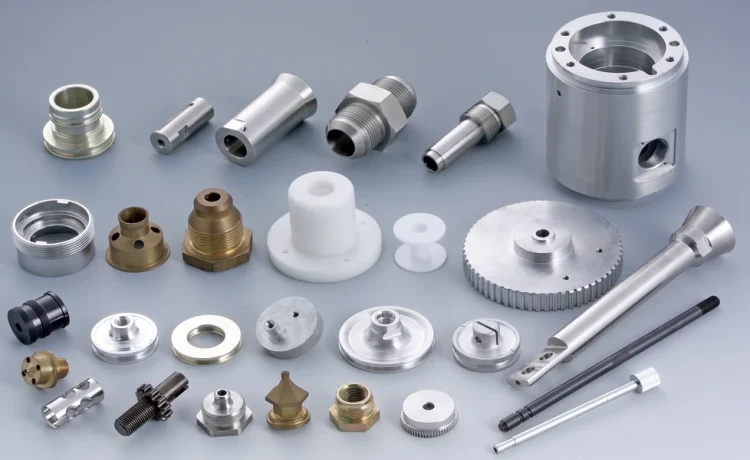
Precision machining is the discipline that separates a component that fits, functions, and lasts from one that merely resembles the intended design. In industries where the performance of a finished assembly depends on the exact geometry, surface condition, and material integrity of every component within it, the quality of precision turned components is not a manufacturing nicety but an engineering requirement. Understanding how precision machining processes produce the dimensional accuracy, surface finish, and consistency that demanding applications require helps procurement engineers, design teams, and quality managers evaluate and specify the right manufacturing source for the turned component requirements.
What are precision turned components?
Precision turned components are machined parts produced on CNC lathes, automatic screw machines, or multi-spindle turning centres by rotating the workpiece while a cutting tool removes material to produce the desired geometry. The precision in precision turned parts refers to the dimensional accuracy and surface quality that the machining process achieves, typically characterised by tolerances measured in microns, surface roughness values of Ra 0.4 to 1.6 micrometres or better, and the geometric tolerances of cylindricity, concentricity, and perpendicularity that are critical in rotating, sliding, and sealing applications.
Precision components manufacturers in India produce turned parts across a wide range of materials and geometries:
- Metals: brass, aluminium, stainless steel, carbon steel, alloy steel, titanium, and the copper alloys that the electrical and electronics industries require.
- Geometries: shafts, pins, bolts, nuts, bushings, connectors, fittings, spacers, and the custom geometries that OEM specifications define.
- Sizes: from sub-millimetre miniature components for medical devices and precision instruments to large-diameter turned parts for industrial machinery and automotive systems.
What machining processes produce precision turned components?
The production of precision turned components involves a combination of machining operations whose selection and sequencing depend on the component geometry, the required tolerances, the production volume, and the material being machined:
- CNC turning: computer-controlled turning centres with live tooling perform the primary turning operations and a range of milling, drilling, and threading operations in a single setup, reducing the number of handling and setup steps that introduce dimensional error.
- Swiss-type CNC turning: a turning process in which the workpiece is fed through a guide bushing as it rotates, providing continuous support close to the cutting zone. Swiss turning produces exceptional accuracy and surface finish in small-diameter, high-length-to-diameter-ratio components, and is the preferred process for the connector pins, medical components, and watch parts that require both the highest dimensional accuracy and the finest surface finish.
- Multi-spindle turning: high-volume production on automatic multi-spindle machines that perform multiple operations simultaneously on different stations, producing complex geometries at cycle times that CNC single-spindle turning cannot approach for very high volumes.
- Secondary operations: grinding, honing, lapping, and the surface treatment processes (plating, anodising, passivation, heat treatment) that complete the component to the full specification.
How does precision machining improve quality across the production process?
The quality of precision turned components is determined not only by the capability of the machine tool but by the full production system that surrounds it. The elements of precision machining that contribute to consistent output quality include:
- Machine tool accuracy and condition: the geometric accuracy of the machine tool’s spindle, guideways, and tool positioning system determines the achievable tolerance. Regular calibration and preventive maintenance of the machine tool ensure that the machine continues to produce within specification as the tool ages.
- Cutting tool selection and management: the correct grade, geometry, and coating of the cutting tool for the specific material and operation, and the systematic replacement of tools before wear reaches the point where dimensional or surface quality is compromised.
- In-process measurement and Statistical Process Control: measuring component dimensions during production, rather than only in final inspection, allows process drift to be detected and corrected before out-of-tolerance components are produced. SPC charts provide the process data that separates common-cause variation from special-cause events requiring intervention.
- Coolant and chip management: the temperature of the workpiece and the cutting zone directly affects dimensional stability in precision machining. Effective coolant application maintains the thermal stability that accuracy requires, and chip management prevents recutting of chips that would damage surface finish.
What industries depend on precision turned components manufacturers?
The range of industries that depend on quality precision turned components manufacturers in India is extensive:
- Automotive: fuel injection components, steering and suspension pins, transmission shafts, and the fasteners and fittings of engine and chassis assemblies.
- Aerospace and defence: actuator components, hydraulic fittings, and the safety-critical turned parts that aerospace quality standards govern.
- Medical devices: surgical instruments, implant components, and the connector and coupling parts of diagnostic and therapeutic medical equipment.
- Electronics and electrical: connector pins, terminal posts, and the precision inserts and spacers of electronic assemblies
Established brass components manufacturers also cater to industrial requirements for precision turned components, precision turned parts, and custom machined components across automotive, medical, electronic, and other engineering applications. Their CNC turning capabilities, quality management systems, and material expertise support the demanding tolerances and consistency requirements of sophisticated OEM and industrial customers.