


Many organizations set goals at the start of the year, yet those goals often lose momentum somewhere along the way. Meetings happen, plans are discussed, and then daily work slowly pulls attention in different directions. Before long, teams are not entirely sure what the main objective was meant to be.
This is where the OKR framework – Objectives and Key Results can make a real difference. It helps teams stay focused, track progress clearly, and work toward outcomes that actually matter.
A helpful first step is OKR training, especially for teams unfamiliar with the method. Companies like Wave Nine support organizations by turning OKRs into everyday practices that encourage accountability and transparency. When teams understand how their work connects to bigger goals, they naturally become more engaged and purposeful in what they do.
Begin with Strong Objectives
An objective should describe what you want to achieve in a way that actually motivates people. It is not meant to be a checklist item or a dull statement.
Instead, think of it as the big direction.
For example:
- Weak objective: Improve customer engagement
- Better objective: Create an exceptional customer experience that builds long-term loyalty
The second version gives the team something meaningful to aim for. That emotional element matters more than many managers realize.
Create Measurable Key Results
Once the objective is clear, the next step is defining key results. These are the indicators that show whether progress is happening.
Effective key results usually have a few characteristics:
- Clear numbers or measurable outcomes
- A specific timeframe
- Focus on results, not activities
For instance, if the objective is improving customer experience, the key results might include:
- Increase customer retention rate by 20%
- Achieve a customer satisfaction score of 90%
- Reduce response time to customer queries by 30%
These metrics remove guesswork. Either progress is happening, or it is not happening at all.
Align Goals Across the Organization
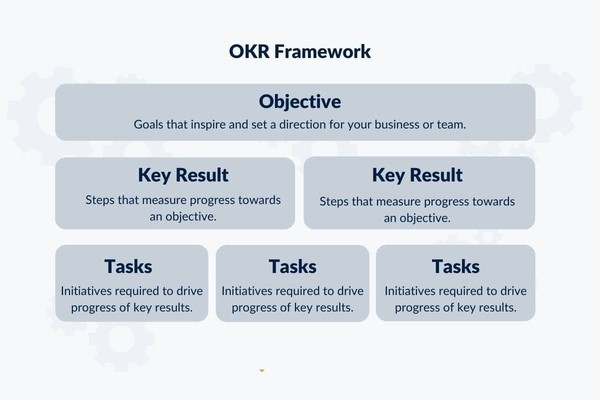
One of the real strengths of OKRs is alignment. Everyone, from leadership to individual teams, should understand how their goals connect to the company’s broader direction.
A simple structure often looks like this:
- Company Objective: Expand market presence
- Marketing Key Result: Generate 10,000 qualified leads
- Sales Key Result: Convert 18-20% of those leads
This connection between teams keeps everyone moving in the same direction.
Review and Adjust Regularly
OKRs are not meant to sit untouched in a document. Successful teams revisit them frequently.
Regular check-ins help teams:
These reviews don’t have to be long. Even short discussions can keep momentum alive.
Accept Imperfect Results
Here is something many teams find surprising: OKRs are intentionally ambitious. Hitting about 70% of a key result is often considered a solid outcome.
The idea is simple. Stretch goals encourage experimentation, creative thinking, and faster growth.
Final Thoughts
Implementing OKRs takes discipline, but it does not need to be complicated. With clear objectives, measurable results, team alignment, and regular reviews, organizations can turn goals into real progress. And when OKRs become part of everyday work culture, they stop feeling like a framework and start functioning as a shared roadmap forward.