
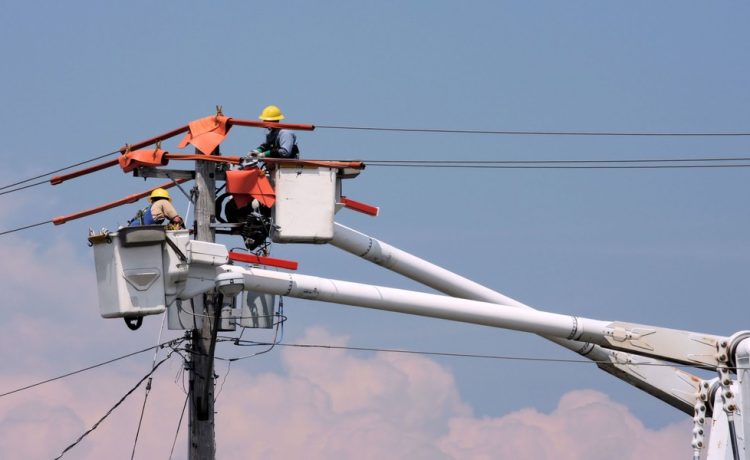
Out here in Texas, we like to say if you don’t like the weather, just wait five minutes. But if you’re a lineman, you don’t have the luxury of waiting. When the sky turns that bruised shade of purple and the wind starts howling across the Panhandle, that’s usually when your shift starts. Working as a lineman is often ranked as one of the top ten most dangerous jobs in the country, and for good reason. We don’t just work near danger; we strap into a harness and climb right into its lap.
The hazards aren’t always loud or obvious. Sure, a transformer blowing is a heart-stopper, but often it’s the quiet, invisible stuff that gets you. It’s the stray voltage on a guy wire or the “dead” line that suddenly decides to wake up. To survive a thirty-year career, you need more than just grit; you need a deep respect for the physics of the grid and a lineman tools kit that you trust with your life. Let’s talk about the big hitters-the hazards that keep us on our toes-and how we use our gear to stay on the right side of the dirt.
1. Step and Touch Potential: The Ground Isn’t Always Your Friend
Most folks think they’re safe as long as they aren’t touching a wire. But electricity is like water looking for a drain. If a high-voltage line hits the ground, the earth itself becomes energized. This creates “Step Potential”-a voltage difference between your feet as you walk. If one foot is at 5,000 volts and the other is at 2,000, that electricity is going to use your legs as a bridge.
How to Avoid It: We use “Equipotential Grounding.” By using specialized lineman equipment like personal ground sets, we ensure that everything we touch-and everything we stand on-is at the exact same electrical potential. If there’s no difference in voltage, the current won’t flow through you. It’s like a bird sitting on a 13k wire; as long as he’s only touching that one wire, he’s just a bird on a wire. Touch the pole and the wire at the same time? That’s lunch.
2. Induced Voltage: The Ghost in the Machine
Here’s a fun fact that’ll keep you up at night: a line doesn’t have to be physically connected to power to be dangerous. If a “dead” line runs parallel to a “live” one for a long enough distance, the magnetic field from the live wire can “induce” a charge into the dead one. You go to grab it with your bare hand tools, thinking it’s cold, and suddenly you’re taking a hit you never saw coming.
How to Avoid It: This is where hot sticks and an electrical hot stick become your best friends. We never, ever assume a line is dead until we’ve tested it with a high-voltage voltmeter and applied our own grounds. Using an electrical hot stick allows us to maintain the “Minimum Approach Distance” (MAD). It’s the ultimate social distancing-keeping a fiberglass barrier between you and the potential for a bad day.
3. The Arc Flash: A Sun in a Suitcase
We’ve covered this before, but it bears repeating because it’s the most violent hazard we face. An arc flash happens when electricity jumps through the air. It’s essentially a localized explosion. According to OSHA and the NFPA, temperatures in an arc flash can hit 35,000∘F. To put that in perspective, that’s four times hotter than the sun.
How to Avoid It: This is all about your protective workwear and ppe clothes. You won’t catch a Texas lineman worth his salt working on energized equipment without a category-rated face shield and FR (Flame-Resistant) clothing. But beyond clothes, it’s about the tools. Using high-quality Crimpers and Lineman Impact Wrenches that allow for fast, precise work means you spend less time in the danger zone. The faster you can secure a connection and get out, the lower your statistical risk.
4. Second Point of Contact: The Deadly Connection
This is the one that gets the veterans. You’re focused on the “hot” wire with your right hand, and without thinking, you lean your left shoulder against a grounded transformer tank or grab a neutral wire to steady yourself. Now, you are the path to ground.
How to Avoid It: Cover-up, cover-up, and more cover-up. We use lineman accessories like rubber blankets, line hoses, and plastic covers to “insulate” every possible grounded surface near the work area. If you can’t touch it, it can’t kill you. This is why your lineman tools kit always includes more “rubber goods” than actual metal tools.
The Role of Precision Tools in Safety
You might wonder how a speed systems cable prep kit or a cpk-4 helps with safety. It’s simple: clean work is safe work. When you use the CPK-4 to prep a URD (Underground Residential Distribution) cable, you’re ensuring there are no jagged “tracking” paths left on the insulation. Poorly prepped cable leads to “flash-overs” inside terminals. By using the right hand tools for cable prep, you’re preventing a future hazard for the next guy who has to open that cabinet.
Conclusion
The grid is a living, breathing beast. It provides the lifeblood for our hospitals, our AC units during a 110-degree Texas scorcher, and the lights we read by at night. But it doesn’t have a conscience. It doesn’t care if you’ve been a lineman for twenty minutes or twenty years.
Avoiding electrical hazards is about discipline. it’s about inspecting your electrical hot stick for nicks every single morning, it’s about wearing your ppe clothes even when the sweat is stinging your eyes, and it’s about trusting your lineman tools but never trusting the line. We stay safe by being smarter than the current.
Unique FAQs
1. Why is an “electrical hot stick” made of fiberglass instead of wood? Wood can absorb moisture from the Texas humidity, and moisture conducts electricity. Fiberglass is non-conductive, lightweight, and can be sealed to prevent water from ever getting inside, making it the gold standard for high-voltage work.
2. How do “Crimpers” contribute to lineman safety? Old-fashioned manual crimpers required a lot of body English to close. If you slipped while straining, you could easily hit a second point of contact. Modern battery-powered Crimpers allow you to maintain a stable, safe body position while the tool does the heavy lifting.
3. What is the “Minimum Approach Distance” (MAD)? MAD is the calculated distance a lineman must maintain from an energized conductor to prevent an arc-over. It varies based on voltage and altitude. Think of it as your “safety bubble.”
4. Does “protective workwear” really stop an electric shock? Not exactly. PPE clothes and protective workwear are designed to protect you from the heat and flame of an arc flash so your clothes don’t melt to your skin. For shock protection, we rely on rubber insulating gloves and boots.
5. Why are “Lineman Impact Wrenches” better than manual wrenches for safety? When you’re up on a pole, you want to minimize the time you spend “fighting” with a bolt. A Lineman Impact Wrench allows you to tighten hardware with one hand, keeping your other hand free to maintain three points of contact on the pole or bucket.