
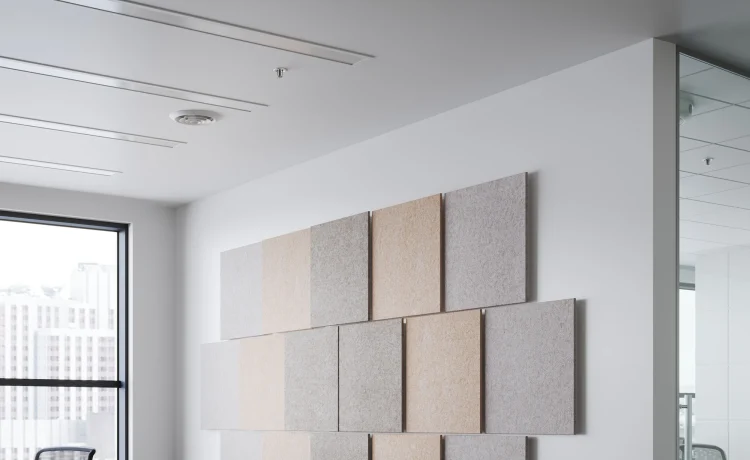
Acoustic panels are often marketed as a simple solution to noisy spaces. Install a few panels, and suddenly your room should feel calmer, clearer, and more comfortable. That is the expectation, at least.
In reality, many people end up disappointed. The panels are installed, yet the noise issue persists. Conversations are still heard from outside, echoes may still linger, and the overall improvement feels less dramatic than anticipated.
The problem is not that acoustical panels do not work. It is that they are often expected to do things they were never designed for. Once you understand how they actually function, the gap between expectation and reality starts to make sense.
They Improve Sound, Not Block It
One of the biggest misconceptions is confusing sound absorption with soundproofing.
Acoustic panels are designed to absorb sound within a space. They reduce reflections, which helps control echo and improves clarity. This makes speech easier to understand and prevents sound from bouncing around the room.
What they do not do is stop sound from entering or leaving a space entirely.
If your main issue is noise from neighbours, traffic, or other external sources, panels alone will not solve it. That requires soundproofing, which involves adding mass, sealing gaps, and often modifying the structure itself.
When people expect silence but only get improved clarity, it can feel like the panels are not working, even though they are doing exactly what they are meant to do.
They Only Work Where Sound Reaches Them
Acoustic panels are passive elements. They do not actively seek out sound. They only absorb sound that physically reaches their surface.
This means placement matters more than most people realise.
If panels are installed in areas where sound reflections are minimal, their impact will be limited. On the other hand, placing them at key reflection points can make a noticeable difference with fewer panels.
When panels are scattered randomly, it often leads to underwhelming results. It is not about coverage alone. It is about intercepting sound at the right moments in its path.
They Cannot Fix Structural Noise Issues
Not all noise behaves the same way.
Airborne noise, such as voices or music, is what acoustic panels are best at managing within a room. However, structural noise behaves differently.
Impact noise, like footsteps from above, travels through the building structure. Vibrations from machinery or nearby construction can also move through walls and floors.
Acoustic panels have very little effect on these types of noise. This is another reason expectations do not always match reality.
If the problem is structural, solutions need to address the structure itself, not just the surfaces inside the room.
More Panels Do Not Always Mean Better Results
It is easy to assume that adding more panels will continue improving the sound. While this is true to a point, there are limits.
Once the main reflection points are treated, additional panels often produce smaller and smaller improvements. Eventually, the room may even start to feel overly dampened.
This can create a space where sound feels flat or unnatural, especially for conversations or music.
A balanced approach tends to work better. Instead of covering every surface, focusing on key areas delivers a more natural and effective result.
They Do Not Work in Isolation
Acoustic panels are only one part of the overall acoustic environment.
Sound interacts with every surface in a room. Walls, floors, ceilings, furniture, and even décor all influence how sound behaves.
If the rest of the room is highly reflective, panels alone may struggle to make a noticeable difference. For example, a space with tiled floors and bare walls will still reflect sound, even if the ceiling is treated.
Combining panels with other elements, such as rugs, curtains, or upholstered furniture, creates a more complete solution.
Expectations Are Often Too Immediate
Another common issue is expecting instant, dramatic change.
Acoustic improvements are often subtle but meaningful. Instead of complete silence, what you get is better clarity, reduced harshness, and a more comfortable listening environment.
Conversations become easier to follow. Background noise feels less overwhelming. The space simply feels more controlled.
These changes are noticeable over time, but they may not feel as dramatic as people expect in the first few moments after installation.
Not All Panels Perform the Same
Acoustic panels vary widely in terms of material, thickness, and performance.
Thin decorative panels may offer limited absorption, while thicker, denser panels provide better results. Without understanding these differences, it is easy to choose panels that look good but do not deliver the level of performance needed.
This mismatch can reinforce the idea that panels do not work, when in reality the issue lies in selecting the wrong type for the space.
Installation Quality Makes a Difference
Even good panels can underperform if they are not installed properly.
Gaps between panels, incorrect spacing, or poor alignment can reduce their effectiveness. Panels need to be positioned with intention, based on how the room is used and where sound reflections occur.
In some cases, a smaller number of well-installed panels will outperform a larger number installed without a clear plan.
The Real Value of Acoustic Panels
When used correctly, acoustic panels can make a significant difference. They create spaces that feel more comfortable, improve communication, and enhance overall sound quality.
The key is understanding their role.
They are not a universal fix for all noise problems. They are a targeted solution for managing sound behaviour within a space.
Once expectations are aligned with what they actually do, the results tend to feel much more satisfying.
Final Thoughts
Acoustic panels do work, but not always in the way people expect.
The disconnect usually comes from misunderstanding their purpose, placing them incorrectly, or relying on them to solve problems beyond their scope.
A more informed approach changes everything. When you focus on proper placement, realistic expectations, and combining panels with other solutions, the improvements become clear.
In the end, it is not that acoustic panels fail. It is that they are often asked to do too much, without the right strategy behind them.