

Heavy rain in Sydney can expose drainage problems quickly. One hour the yard looks normal, and the next there is water spilling from a grate beside the house, pooling near a path or bubbling from a drain close to the laundry or bathroom wall.
Most homeowners immediately call it a stormwater blockage. That may be right, especially if the overflow is connected to gutters, pits or surface drains. But not every outdoor overflow after rain belongs to the stormwater system. Some external drains are connected to wastewater, and confusing the two can send the repair in the wrong direction.
A blocked drain Sydney needs the right diagnosis because sewer, stormwater and surface drainage each behave differently. The water may be outside, but the system involved is not always obvious from the grate alone.
Start with the type of water you can see
Clear rainwater pooling around a surface grate often points toward stormwater. It may collect leaves, soil and roof debris, and it may appear only during or soon after heavy rain. The water may look muddy, but it should not have a strong sewage smell or contain toilet paper.
Wastewater is different. If the overflow smells like sewage, contains toilet paper or appears when toilets, showers or washing machines are used, the problem may involve the sanitary drainage system. Some homes have an overflow relief point outside that can discharge sewage when the property sewer is blocked or surcharged.
The smell, timing and material in the water give useful clues. They do not replace a professional inspection, but they help avoid assuming every outside overflow is stormwater.
Why rain can trigger more than one kind of fault
Rain obviously increases stormwater load, but wet weather can also reveal weaknesses in sewer lines. If illegal connections, damaged pipes or groundwater entry are present, the sewer system may receive extra water during rain. A pipe already narrowed by roots, debris or a partial collapse can then lose capacity more quickly.
Stormwater lines can also fail in several ways. Leaves and bark can block downpipes. Silt can fill pits. Tree roots can enter underground stormwater pipes. A crushed pipe under a driveway or path can stop water moving even when the grate itself looks clear.
This is why the same symptom, water outside, may need different repairs depending on which system is affected.
The location of the drain matters
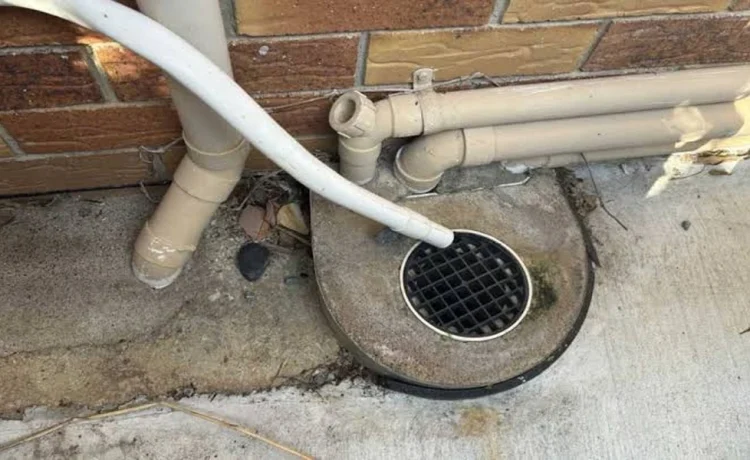
An outdoor grate in a driveway or courtyard may collect surface water. A pit connected to downpipes may be part of the stormwater network. A gully close to the bathroom, laundry or kitchen may be linked to the sewer system. Older homes and renovated properties can have confusing arrangements, especially where landscaping has covered or altered original access points.
The surrounding area also matters. Water pooling at the bottom of a sloping driveway may reflect poor surface fall. Overflow beside a bathroom after toilet use points in a different direction. Water appearing near a retaining wall may involve groundwater or a blocked subsoil drain.
For blocked drains plumber Sydney searches, this is the point many homeowners miss. The visible drain is only one part of the system. Its job and connection decide what the repair should be.
What not to do while guessing
Do not pour chemical cleaner into an outdoor drain when you do not know what system it belongs to. It may sit in a pit, flow toward the wrong place or create a hazard without addressing the blockage.
Do not lift heavy grates or enter pits if there is any risk of unstable ground, contaminated water or electrical equipment nearby. Also avoid hosing more water into the drain to see whether it clears. If the pipe is already blocked, that simply increases overflow.
The safest step is to reduce unnecessary water use if sewage is suspected and keep people away from the area until the source is known.
How a plumber separates sewer from stormwater
A plumber will look at the position of the drain, the fixtures nearby, the timing of the overflow and any signs of sewage. They may run controlled tests, inspect pits, check overflow relief points and use drain equipment through the correct access point.
CCTV inspection can be especially useful where the pipe route is unclear. A camera can show whether the line contains leaves and silt, roots, wastewater deposits, cracks, standing water or a collapsed section. It also helps confirm whether the blockage sits on private drainage or near a connection point that may involve another party.
Correct diagnosis changes the work completely. A stormwater pit full of leaf debris needs a different repair from a sewer line blocked by roots.
A wet-weather overflow deserves a proper answer
It is tempting to wait until the rain stops and forget about the problem once the water disappears. That can be risky. A blocked stormwater line may overflow again during the next storm. A sewer fault may worsen until wastewater backs up indoors.
Take photos, note whether toilets or showers affect the overflow, and check whether the water is clear, muddy or contaminated. Those observations help a plumber investigate faster.
Outdoor drainage problems are easier to manage when the system is identified early. The right question is not only why the drain overflowed, but what kind of drain it is, where it leads and whether the pipe can still move water safely when Sydney weather puts it under pressure.